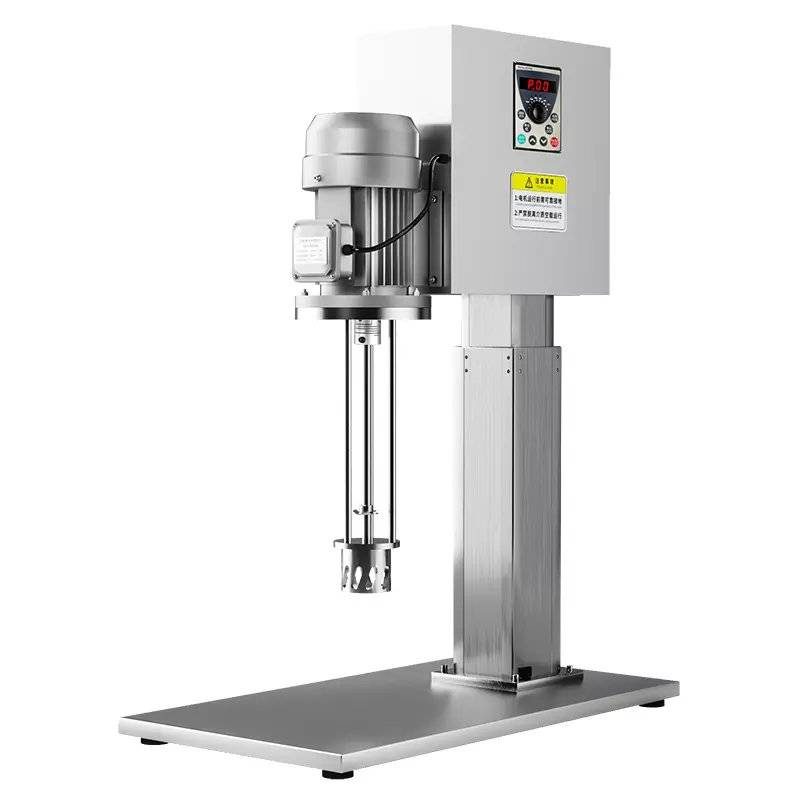
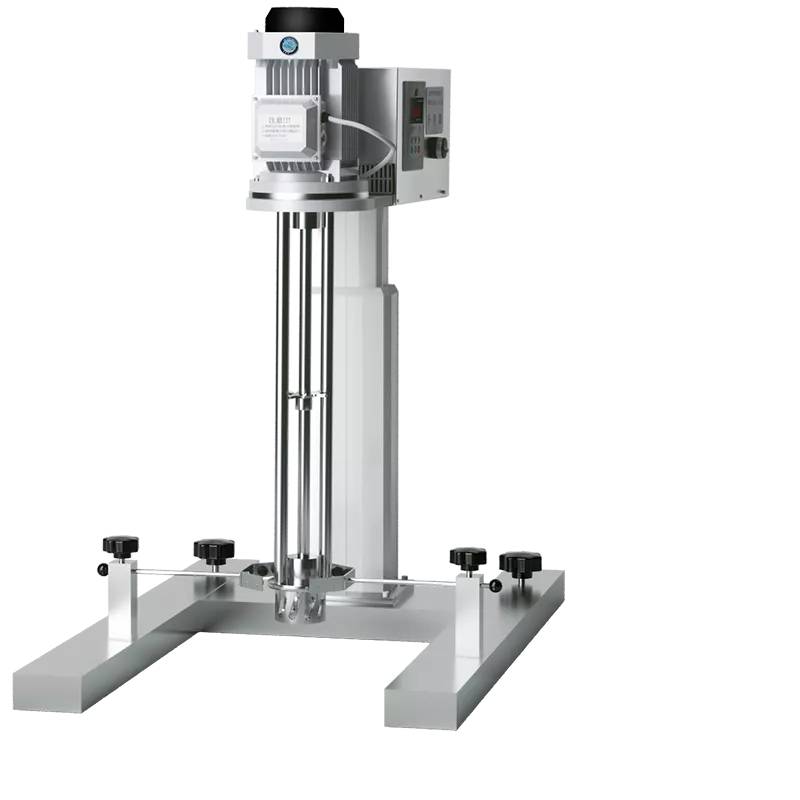

The electric lift emulsifier is a laboratory equipment designed for small laboratory experiments. This high shear mixer homogenizer uses mechanical shear to reduce droplet or particle size and distribute materials more uniformly. Its rotor-stator working head supports emulsification, homogenization, and dispersion, helping produce a consistent mixture when the equipment is correctly matched to the material. This laboratory homogenizer is suitable for material processing and formulation development in industries such as cosmetics, food, pharmaceuticals, paints, inks, lubricants, and textile additives, depending on the material properties and application requirements.
Product Features:
-
304 stainless steel shell, exquisite modelling, solid structure, labour-saving, installation-free;
-
According to the viscosity of the material, choose single/double drums to meet different experimental needs;
-
Different working heads are customised for different viscosities to meet a wide range of laboratory or small batch requirements;
-
Efficient mixing and dispersion: This high shear emulsifier machine combines suitable materials through mixing, homogenization, and emulsification to help achieve a uniform mixture and reduce separation when the formulation and processing conditions are appropriate.
-
Precision rotor-stator working head: The rotor and stator design creates shear forces that support efficient emulsification and dispersion. Different working-head configurations can be selected according to the material's viscosity and processing requirements.
- Non-standard products can be customised, such as explosion-proof type, airtight type, manual lifting type, etc. Materials can be customised according to the requirements of SS304/SS316L/Hastelloy, titanium-molybdenum-nickel alloy, etc.
How Does a High Shear Emulsifier Work?
A high shear emulsifier works by using a rotor-stator mechanism to mix, disperse, and emulsify suitable materials. In this electric lifting emulsifier, the working head operates within the material while the motor drives the rotor at high speed, generating mechanical shear that helps break droplets or particles into smaller sizes and distribute them more evenly.
Working Process
- Material Preparation: Place the ingredients in a suitable vessel, ensuring the batch size and material properties match the equipment's operating requirements.
- Electric Lifting: Lower the emulsifying head into the material using the electric lifting mechanism.
- High-Shear Mixing: The rotor rotates rapidly within the stator, creating shear forces that support mixing, dispersion, and emulsification.
- Homogenization: The process helps distribute droplets or particles more uniformly throughout the mixture.
- Lifting and Removal: Once processing is complete, raise the working head using the lifting mechanism and handle the finished batch according to the application's requirements.
This high shear mixer homogenizer is suitable for laboratory formulation development and compatible with small-batch processing. Actual results depend on material viscosity, formulation, rotor-stator design, operating speed, and processing time. To understand the working principles, applications, and selection criteria in more detail, read our guide on what a homogenizer is and how it works.
Technical Parameters
| Model | HR-750DRH | HR-1500DRH | HR-2200DRH | HR-3000DRH |
| Item No | 1030027001 | 1030021001 | 1030013001 | 1030022001 |
| Power(W) | 750 | 1500 | 2200 | 3000 |
| Capacity(L) | 10 | 50 | 100 | 180 |
| Speed Range(rpm) | 0~10000 | 0~3000 | 0~3000 | 0~3000 |
| Motor Type | Three-phase asynchronous motors | |||
| Stator/Rotor Type | Long hole (standard) / Round hole | Long hole (standard) / Round hole/Claw type | ||
| Lifting Mode | Electirc lifting | Electirc lifting | Electirc lifting | Electirc lifting |
| Lifting Distance(mm) | 300 | 400 | 500 | 600 |
| Instrument Size(mm) | 450x330x700 | 750x620x1050 | 750x620x1050 | 850x620x1250 |
| Bottom Size(mm) | 425x325 | 395x420 | 395x420 | 495x620 |
| Working Head Length(mm) | 300 | 600 | 700 | 800 |
|
Head above Ground Distance(mm) |
30-330 |
50-450 |
50-550 |
50-650
|
How to Select the Right High Shear Emulsifier?
Selecting the right high shear emulsifier depends on your batch size, material properties, processing requirements, and desired mixing results. Consider the following factors when choosing an electric lifting emulsifier for laboratory or small-batch applications.
1. Batch Capacity
Choose a machine that accommodates your required processing volume. A 100L emulsifier homogenizer may be suitable for applications requiring batches within its rated working capacity.
2. Motor Speed and Shear Requirements
Check the operating speed and shear performance your formulation requires. A 3000 RPM emulsifier may suit certain applications, but the appropriate speed depends on the material and required results.
3. Material Viscosity
Consider whether you are processing low-viscosity liquids, creams, lotions, or thicker formulations. Confirm that the selected high shear homogenizer can handle your material effectively.
4. Rotor-Stator Configuration
The rotor-stator working head influences mixing, dispersion, and emulsification performance. Select a configuration suitable for the required droplet size, material properties, and processing method.
5. Electric Lifting Mechanism
An electric lifting emulsifier allows convenient positioning of the working head. Check the lifting range, vessel compatibility, and available working space before selecting a model.
6. Material Compatibility and Cleaning
Verify that the wetted parts are compatible with your ingredients and cleaning procedures. Stainless-steel construction and suitable surface finishes may be important for specific applications.
7. Application and Production Requirements
A laboratory homogenizer may be used for formulation development, testing, and small-batch processing. For production use, confirm the rated capacity, duty cycle, operating conditions, and manufacturer's recommendations.
Before purchasing an emulsifier machine, compare the technical specifications with your actual processing needs and consult the manufacturer if you are unsure which configuration is appropriate. If you are comparing mixing technologies, our guide to homogenizers vs high-shear mixers vs emulsifiers explains their key differences and typical applications.
Applications of a High Shear Emulsifier
A high shear emulsifier mixes, disperses, and emulsifies suitable materials in laboratory and small-batch production environments. The electric lifting mechanism helps raise and lower the working head for convenient positioning during processing.
Common applications include:
- Cosmetics: Mixing creams, lotions, and other suitable cosmetic formulations.
- Food processing: Emulsifying compatible ingredients during product development.
- Pharmaceutical research: Preparing suitable experimental formulations under appropriate processing conditions.
- Paints and inks: Supporting dispersion and mixing of compatible components.
- Lubricants and specialty chemicals: Homogenizing suitable liquid and solid-liquid formulations.
When selecting a high shear mixer, consider batch capacity, material viscosity, rotor-stator configuration, operating speed, and chemical compatibility.
Frequently Asked Questions
What is a high shear emulsifier?
A high shear emulsifier uses mechanical shear to disperse materials and reduce droplet or particle size. It is commonly used for emulsification, homogenization, and mixing in suitable laboratory and industrial applications.
What is the difference between a high shear mixer and a homogenizer?
A high shear mixer uses mechanical shear to mix and disperse materials, while a homogenizer aims to produce a more uniform mixture or reduce particle or droplet size. The functions can overlap depending on the equipment design.
What is a 100L emulsifier homogenizer used for?
A 100L emulsifier homogenizer is intended for processing batches within its rated capacity. The appropriate model depends on the formulation, viscosity, required mixing performance, and working-head configuration.
How does an electric lifting emulsifier work?
An electric lifting emulsifier uses a powered lifting mechanism to position the working head. Its rotor-stator assembly generates shear forces to support mixing, dispersion, and emulsification.
How do I choose a laboratory homogenizer?
Compare the required batch volume, material viscosity, operating speed, working-head design, wetted materials, and application requirements before selecting a laboratory homogenizer.